
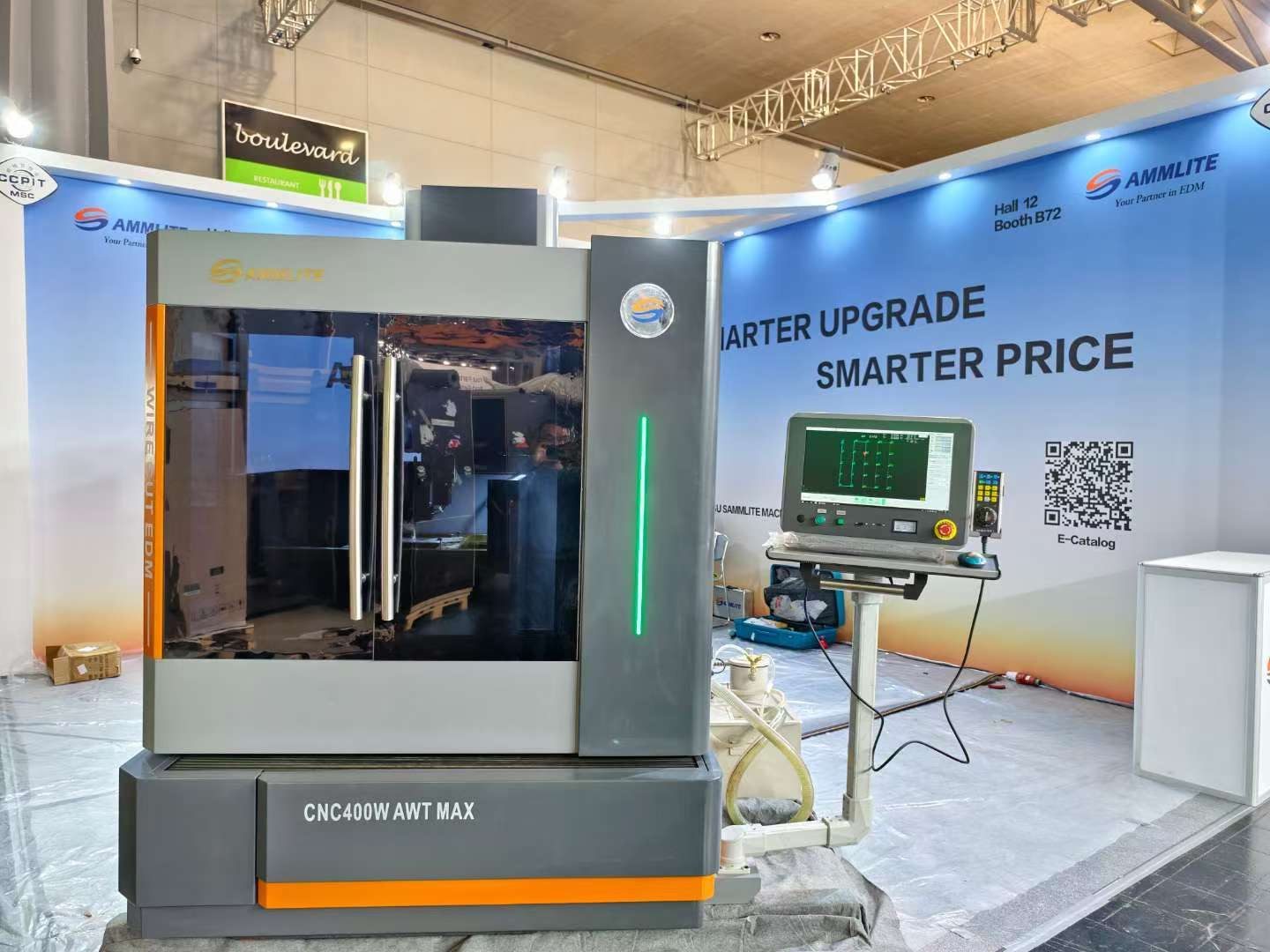
Threading the wire by hand takes an operator a minute or two per start hole, and it is the single biggest reason a wire EDM stops cutting. On a progressive die with forty punch openings, that is an hour of manual work and forty interruptions. Automatic wire threading (AWT) removes that bottleneck.
What Is Automatic Wire Threading?
Automatic wire threading is a system that cuts the wire, guides it through the upper head, through the start hole in the workpiece and into the lower guide, then re-tensions it and restarts cutting, all without an operator. It also re-threads automatically after a wire break, so long programs can run unattended.
How It Works, Step by Step
- Finish the profile: the machine completes the current cut and the slug is handled by the waste-drop function.
- Cut the wire: the wire is cut above the workpiece.
- Move to the next hole: the table moves to the next start hole from the program.
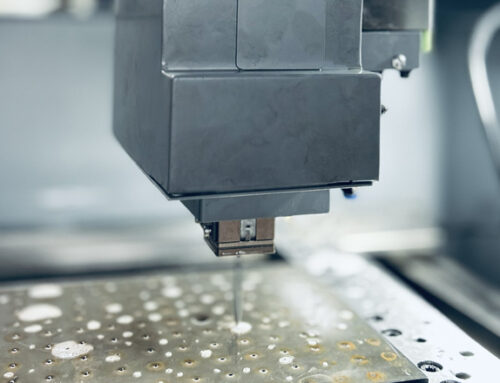
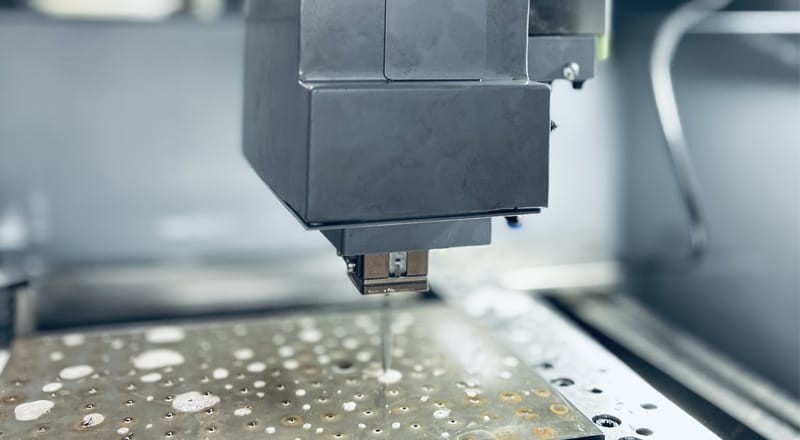
- Thread: a servo-driven feed, guided by air or fluid, pushes the wire through the start hole into the lower guide.
- Tension and restart: the system tensions the wire, confirms continuity and resumes cutting.
What AWT Looks Like on a Sammlite Machine
| Item | CNC400W AWT / AWT MAX |
|---|---|
| Threading time | About 30–45 seconds |
| Start hole diameter | 0.5–2.0 mm (up to 150 mm height) or over 4.0 mm (up to 80 mm height) |
| Wire | 0.18 mm molybdenum |
| Threads per run | Up to 150 |
| Functions | Wire-break sensor, waste drop, tension control, air and liquid cleaning |
| Control | PLC combined with AutoCut V10.1, absolute servo motor |
See the full specification on the CNC400W AWT / AWT MAX product page.
When Does AWT Pay Off?
- Parts with many internal profiles (progressive dies, stripper plates, multi-cavity inserts).
- Shops that want to cut overnight or at weekends without an operator.
- Factories where labor is expensive or skilled operators are hard to hire.
- One operator running several machines.
For single-profile parts or occasional jobs, a standard machine is usually more economical.
Tips for Reliable Automatic Threading
- Drill clean, burr-free start holes; a drill EDM is ideal.
- Keep start holes within the specified diameter range for the workpiece height.
- Keep the threading nozzle and guides clean and fluid filtered.
- Use good-quality, straight wire.




Leave A Comment